

Deconstructing Virality: Sean Kelly Analyzes Neon's Social Media Playbook
An Instagram post by entrepreneur Sean Kelly has sparked a discussion about the mechanics of modern internet fame, focusing on the controversial streamer known as Neon.
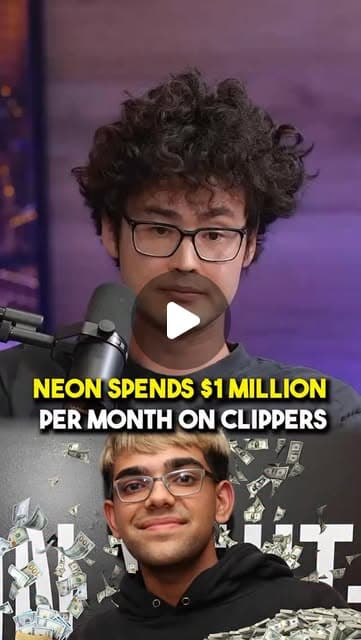
Source image: Instagram
An Instagram post by entrepreneur Sean Kelly has sparked a discussion about the mechanics of modern internet fame, focusing on the controversial streamer known as Neon. In a post dated April 27, 2026, Kelly dissects the strategy that has allegedly propelled Neon to viral status, offering a nuanced perspective that separates the content from the commercial acumen behind it.
The analysis centers on a powerful, if unverified, claim: that Neon's operation spends a staggering $1 million per month on "clippers" to dominate social media feeds.
The Million-Dollar "Clipper" Strategy
At the heart of the discussion is the role of "clippers"—individuals or services paid to create and disseminate short, engaging clips from longer streams. According to a meme image shared in Kelly's post, Neon’s budget for this activity is $1 million monthly. This strategy represents a brute-force approach to virality, aiming to achieve market saturation by flooding platforms with content.
By outsourcing the creation and distribution of short-form videos, a creator can theoretically multiply their presence far beyond what a single person or small team could manage, ensuring their content is seen by a massive audience. This method effectively transforms long-form content into an arsenal of viral-ready moments, engineered for maximum reach and engagement on algorithm-driven platforms.
A Creator's Dilemma: Content Quality vs. Commercial Hustle
While the strategy itself may be effective, Sean Kelly draws a sharp distinction between the business model and the product. He expresses a personal distaste for the content, labeling it as "low IQ/ Low vibrational." This sentiment reflects a common critique within the creator community regarding content that prioritizes shock value or simplistic entertainment over substance.
However, Kelly immediately pivots to express admiration for the business savvy involved, stating, "But I respect the HUSTLE." He frames the success of creators like Neon as a sign of the times, noting that it is the "easiest time in the history of the world to make a quick buck from your laptop." This perspective highlights a central tension for modern creators: the conflict between producing content they are proud of and creating what is commercially viable. Kelly’s analysis suggests that in today's digital landscape, the ability to engineer virality and monetize attention is a skill set worthy of respect, independent of the content's artistic or intellectual merit.
A Generational Shift in Digital Entrepreneurship
Kelly's commentary also serves as a reflection on a generational shift in entrepreneurship. He observes the industriousness of "these young dudes," many of whom are around 18 years old, and contrasts it with his own past. "We were not this Industrious at age 18," he admits, adding, "Took me a long time to find my lane."
This observation points to a new paradigm where digital natives are identifying and exploiting monetization opportunities at a much younger age than previous generations. The accessibility of online tools and platforms has lowered the barrier to entry for starting a business, allowing young entrepreneurs to build significant operations directly from their laptops.
Kelly's post celebrates this entrepreneurial spirit, recognizing that a new generation has quickly mastered the complex systems of online attention and commerce.
Market Validation and the Professionalization of Virality
The viability of the "clipper" model is further validated by the responses to Kelly's post. One commenter, identifying themselves as the owner of radio stations and a network of over 400 social media accounts, provided concrete evidence of a professional industry built around this exact service.
This media owner's portfolio includes accounts with follower counts ranging from 2,100 to 130,000, demonstrating a significant distribution network.
By directly offering their services with the message, "If you’re looking for clippers let us know!", the commenter confirms that content clipping is not just a fan activity but a professionalized, scalable business. This response shows that a formal B2B ecosystem exists to support creators aiming for mass visibility, validating the idea that significant financial investment in content distribution is a recognized path to online dominance.
In conclusion, the conversation initiated by Sean Kelly's post offers a valuable look into the machinery of modern internet fame. The case of Neon, whether the $1 million figure is precise or illustrative, highlights a powerful playbook for achieving virality through a massive, paid distribution network of "clippers." Kelly's analysis underscores a key debate in the creator economy regarding the value of "hustle" versus the quality of content, while also pointing to a significant generational shift in digital entrepreneurship.
The professionalization of these viral services, as evidenced by market participants, confirms that the battle for attention is increasingly a game of strategy, investment, and scale.
Related

Meta's new aI-Powered facebook creator studio: tools for creators
Meta's revamped Facebook Creator Studio introduces AI-powered tools to help creators streamline content planning and engagement. The standalone app aims to compete with rivals by offering personalized AI assistance and integrated monetization features.

Twitch's new certification: A sponsorship advantage or just more questions?
Twitch's new Creator Sponsorship Certification offers streamers early access to campaigns but raises concerns about its effectiveness and fairness. The program aims to professionalize creators but leaves questions about discoverability and real-world impact unanswered.

Beyond the View Count: The Professionalization of the Modern YouTube Creator
Top YouTube creators like MrBeast and Colin & Samir now run full-scale media businesses with teams, multiple revenue streams, and IP development. YouTube supports this shift with monetization tools, as channels earning six figures grew 35% in 2025.