

Tom Bilyeu's Blueprint for a $20 AI Team to Replace a $400,000 Staff
Entrepreneur Tom Bilyeu, who co-founded a billion-dollar company with 1,300 employees, has outlined a new model for starting a business that he claims can replace a five-person specialist team, which would typically cost…
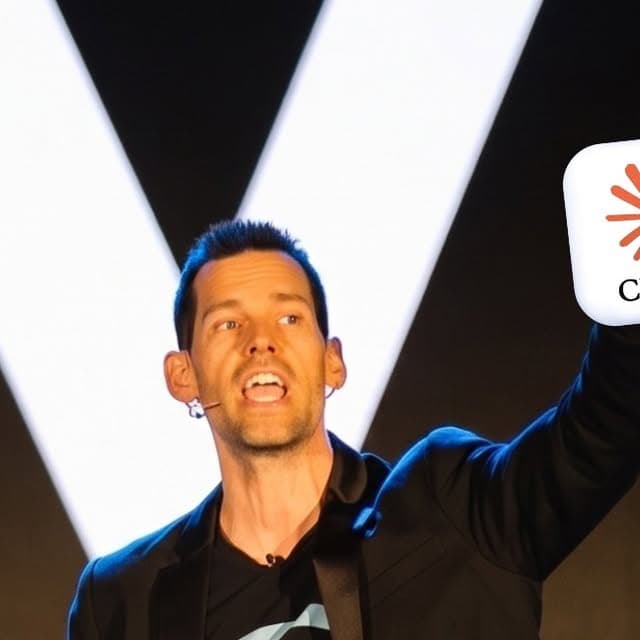
Source image: Instagram
Entrepreneur Tom Bilyeu, who co-founded a billion-dollar company with 1,300 employees, has outlined a new model for starting a business that he claims can replace a five-person specialist team, which would typically cost around $400,000 per year. In a recent Instagram post, Bilyeu detailed how an entrepreneur can now build a functional team for these five roles in about 60 minutes using a single $20 AI tool.
The core of his strategy involves creating a dedicated "employee" for each specific function within its own chat thread, using platforms like a CustomGPT or a Claude Project. These AI agents are then run in a specific sequence to take an idea from market research to a launched product with a marketing plan.
Here is the five-step framework Bilyeu shared for building this AI-powered team.
1. The Researcher: Identifying Market Pain
Bilyeu identifies the Researcher as the most critical hire, stating, "Skip it and nothing else matters." This AI employee's sole purpose is to find urgent and painful problems that customers are willing to pay to solve. The process begins with a precise prompt designed to ensure the AI acts as a diligent researcher that verifies its findings.
The suggested prompt is: "Act like a world-class researcher who checks their work. List the top 5 urgent, painful problems faced by [your customer]. Give me proof from Reddit, Amazon reviews, and real forums." This step grounds the entire business concept in validated market needs rather than assumptions.
2. The Strategist: Developing a Testable Offer
Once the customer's pain points are identified, the Strategist's role is to transform that research into a tangible, testable offer. Bilyeu emphasizes that this is not about building a full product but creating a "small free offer you can test this week." The goal is to create something so valuable that a customer would feel it's worth $50 to $100.
The prompt for the Strategist is: "Based on those pain points, give me 5 free offer ideas my customer would race to download... Rank them by fastest to build and most likely to get sign-ups." This focuses the AI on generating practical, high-conversion ideas that can be executed quickly.
3. The Copywriter: Writing Words That Convert
With a strategic offer in place, the Copywriter AI is tasked with crafting the messaging. This involves creating concise, powerful language designed to capture attention and drive action. Bilyeu's method breaks the copywriting process into manageable pieces.
The prompt directs the AI to: "Write a one-line hook for [my offer]. Then 3 benefit bullets that make it impossible to ignore. Then a one-page site with the headline, the bullets, and a strong call to action." This structured approach ensures all essential elements of a high-converting landing page are created.
4. The Builder: Launching the Web Page
The fourth employee is the Builder, which puts the offer online without requiring any coding knowledge. Bilyeu suggests using "vibe-coding" tools like Bolt or Lovable, which can generate websites based on descriptive prompts and examples.
The prompt for this stage is: "Build a one-page site for [my offer] in the style of [drop a design you like]. Add my copy. Capture emails for the free offer. Make it work on mobile." This command automates the web development process, turning the copy and strategy into a functional, mobile-responsive page for lead capture.
5. The Marketer: Attracting Customers and Driving Revenue
The final AI employee is the Marketer, responsible for getting the offer in front of the target audience and turning that attention into customers. The focus is on creating a sustainable growth plan, with an emphasis on free social media strategies.
The prompt instructs the AI to: "Build a marketing plan to reach [my customer] online, heavy on free social. Then map a 30/60/90 day plan to hit $5K to $10K a month. Include posting cadence and weekly priorities." This provides the new business with a clear roadmap for customer acquisition and revenue growth.
Bilyeu notes that simply having the prompts is not enough. He explains that the key is learning how to manage this AI team, knowing where common roadblocks occur, and understanding when to push back on the AI's output. The ultimate goal of his system is to enable entrepreneurs to move from an idea to a tested business in a matter of days instead of months.
Related

Creator profile: zahra rose — tikTok and strava creator-Ambassador
Zahra Rose bridges digital fitness trends and real-world community runs as a TikTok-Strava ambassador. Her Brussels fun run exemplifies the fund's mission to transform online inspiration into offline participation.

Amazon's fire TV creator hub challenges youTube with new creator opportunities
Amazon's Fire TV Creator Hub offers creators new monetization opportunities beyond traditional ad revenue, including brand partnerships and commissions. The platform leverages Amazon's OS control and customer data to compete with YouTube in the connected TV space.

Creator M&A Is Here. You're Probably Thinking About It All Wrong.
No summary available.