

IShowSpeed's World Cup Stream: A Viral Moment or the Future of Sports Broadcasting?
A recent viral social media post has ignited a significant conversation within the creator economy, suggesting a landmark shift in how major sporting events are broadcast.
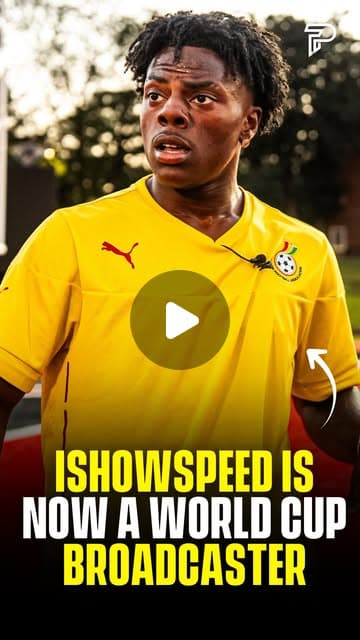
Source image: Instagram
A recent viral social media post has ignited a significant conversation within the creator economy, suggesting a landmark shift in how major sporting events are broadcast. According to a post from Pubity on Instagram, popular content creator IShowSpeed was granted official rights to stream World Cup matches, a move that could redefine the relationship between creators, sports leagues, and traditional media.
This development, and the massive audience it attracted, warrants a closer look at the evolving landscape of sports entertainment.
The Landmark Claim
The core of the story originates from an Instagram post which stated that the Fédération Internationale de Football Association (FIFA), Fox Sports, and YouTube had given IShowSpeed the rights to broadcast live World Cup matches on his channel. The post highlighted this as "a first for any content creator at a major tournament." This partnership between legacy institutions and a digital-native personality represents a potentially groundbreaking strategy.
The impact of this alleged deal was quantified by a stunning viewership metric also cited in the post: 9.2 million people watched IShowSpeed’s stream of Portugal’s opening match. To underscore the magnitude of this figure, the post added that "Fox’s own broadcast likely didn’t come close." This direct comparison positions a single creator's broadcast as a formidable competitor to one of the largest traditional sports broadcasters, raising questions about where audiences are choosing to consume premium live content.
Unpacking the Viewership Numbers
While the 9.2 million viewer figure is impressive, comments on the original social media post, which originated from a reel at instagram.com/reel/DZysk7ppQSs/, offer crucial context for analysis. One user pointed out a key distinction in how viewership is measured across platforms, stating, "People rewatch Speed's live streams. Fox has more viewers when the game is live."
This comment introduces a critical perspective for creators and marketers. The 9.2 million figure likely represents total views on the video after the live event concluded, including replays, rather than the peak or average concurrent viewership that is the standard for traditional television ratings.
While still a massive number indicating enormous reach and engagement, it is a different metric than the one used to measure a live television audience. This distinction is vital for understanding the true nature of the audience and avoiding a direct, like-for-like comparison with traditional broadcast numbers.
The Power of Personality-Led Commentary
The success of a stream like IShowSpeed's is not solely about access to the game itself; it is about the value-add of the creator's personality. Another comment on the post alluded to this, noting that viewers tune in because they "want to see speed mad and jealous for Messi." This insight reveals the core appeal of creator-led sports content.
Fans are not just watching a football match; they are participating in a shared experience curated by a personality they follow.
The creator’s reactions, established narratives (such as a known fandom or rivalry), and direct interaction with their community provide a layer of entertainment that a traditional broadcast, with its focus on neutral, professional commentary, does not offer. For millions of viewers, the game becomes the backdrop for the main event: watching their favorite creator experience the game.
This is a powerful lesson for brands and rights holders, demonstrating that the "how" of watching is becoming as important as the "what."
The reported collaboration between IShowSpeed, FIFA, Fox Sports, and YouTube, if it becomes a model for the future, signals a major strategic pivot. It suggests that major sports entities are beginning to see creators not as threats but as powerful partners for reaching younger demographics.
By licensing content to top creators, they can tap into pre-built, highly engaged communities. This event, as described, serves as a powerful case study on the immense audience a single creator can command and points toward a future where official broadcasts and personality-driven streams coexist to maximize reach and engagement for the world's biggest sporting events.
Related
Creator profile: zahra rose — tikTok and strava creator-Ambassador
Zahra Rose bridges digital fitness trends and real-world community runs as a TikTok-Strava ambassador. Her Brussels fun run exemplifies the fund's mission to transform online inspiration into offline participation.
Amazon's fire TV creator hub challenges youTube with new creator opportunities
Amazon's Fire TV Creator Hub offers creators new monetization opportunities beyond traditional ad revenue, including brand partnerships and commissions. The platform leverages Amazon's OS control and customer data to compete with YouTube in the connected TV space.

Creator M&A Is Here. You're Probably Thinking About It All Wrong.
No summary available.