

More Than a Milestone: Why the First Creator Billionaire Will Redefine the Industry
Every major industry reaches a defining moment when it produces its first billionaire.
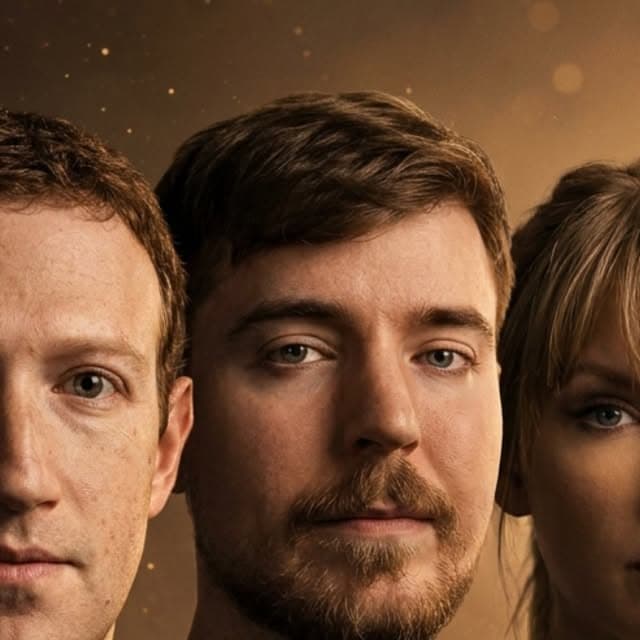
Source image: Instagram
Every major industry reaches a defining moment when it produces its first billionaire. This milestone is more than a story of individual wealth; it serves as the ultimate validation of an industry's scale and influence. According to a recent social media post from the account "luxury," the emergence of a first billionaire, whether in technology, film, music, or social media, signals the point where an idea transforms into a "global economic force." This event historically marks a fundamental "shift in how the world works, spends, communicates, or entertains itself."
As the creator economy continues its rapid expansion, the conversation has inevitably turned to its own billionaire benchmark. The race to crown the first creator with a billion-dollar fortune is not merely about financial achievement. It is about proving that this new model of media, entertainment, and commerce has the same revolutionary power as the industries that came before it.
When this moment arrives, it will signify that the creator economy has achieved its "true scale."
The Billionaire as an Industry Benchmark
The concept of a "first billionaire" acts as a powerful symbol of an industry's maturity. The analysis shared by "luxury" on Instagram frames this achievement as the definitive proof of concept for a new economic sector. When an individual can amass a billion-dollar fortune within a specific field, it demonstrates that the industry has developed the infrastructure, market size, and cultural relevance to generate and sustain immense value.
This has been the pattern for every significant economic revolution. The first billionaires in technology emerged as personal computing and the internet reshaped global communication and business. In film and television, they represented the consolidation of mass media and its power to shape global entertainment.
The first billionaires in social media solidified the web's shift from a utility to a community platform. In each case, their fortunes were built on the back of a profound societal shift. The creator economy is now driving a similar transformation, changing how people consume content, make purchasing decisions, and form communities, suggesting it is on the same trajectory.
Defining Wealth in the Creator Economy
While the prospect of a creator billionaire is a frequent topic of discussion, defining and verifying such a fortune presents unique challenges. A comment on the original "luxury" post highlighted this complexity, pointing to one of the world's most prominent creators and stating, "I don’t think you can classify Mr beast as a billionaire since he doesn’t have nearly that much money, even in assets."
This observation cuts to the core of the issue. Unlike traditional industries where wealth is often tied to public company stock or tangible holdings, a top creator's net worth is a complex mix of revenue streams, brand equity, intellectual property, and private company valuations.
Calculating a creator's wealth requires looking beyond direct earnings to the total value of their "assets," which can include production companies, merchandise lines, food brands, and software applications. The debate over any single creator's status underscores that the path to a billion-dollar valuation in this space will likely involve building a diversified business empire, not just accumulating massive viewership.
A New Kind of Economic Force
The journey toward the first creator billionaire is therefore a measure of the industry's evolution from individual personalities to scalable enterprises. The source post notes that behind every first billionaire is a change in how the world "spends, communicates, or entertains itself." The creator economy is actively driving change in all three areas simultaneously.
Creators are the new entertainers, their content rivaling that of traditional television and film. They are the new communicators, building direct relationships with audiences that legacy media companies cannot replicate. And they are a powerful new force in commerce, influencing spending habits through authentic, personality-driven marketing.
When a creator finally crosses the billion-dollar threshold, it will be because they have successfully harnessed these shifts to build a multifaceted global enterprise. This achievement will validate the creator economy not as an alternative to traditional media, but as its successor—a dominant economic force built on a new set of rules for entertainment, communication, and business.
The emergence of the first creator billionaire will be the ultimate signal that the industry has arrived. It will prove that a business model centered on individual talent and direct audience connection can generate value on par with the largest legacy industries.
As the original post asked, the question is no longer if, but when and how this milestone will be reached, cementing the creator economy's place as a pillar of the modern global economy.
Related

Meta's new aI-Powered facebook creator studio: tools for creators
Meta's revamped Facebook Creator Studio introduces AI-powered tools to help creators streamline content planning and engagement. The standalone app aims to compete with rivals by offering personalized AI assistance and integrated monetization features.

Twitch's new certification: A sponsorship advantage or just more questions?
Twitch's new Creator Sponsorship Certification offers streamers early access to campaigns but raises concerns about its effectiveness and fairness. The program aims to professionalize creators but leaves questions about discoverability and real-world impact unanswered.

Beyond the View Count: The Professionalization of the Modern YouTube Creator
Top YouTube creators like MrBeast and Colin & Samir now run full-scale media businesses with teams, multiple revenue streams, and IP development. YouTube supports this shift with monetization tools, as channels earning six figures grew 35% in 2025.