

Beyond the Solo Grind: A Practical Guide to Creator Studios
Successful independent creators are forming multi-person "creator studios" (like MrBeast Productions) to scale operations, diversify revenue, and ensure stability. This shift—driven by platforms like YouTube and backed by investors—turns solo creators into media businesses with s...
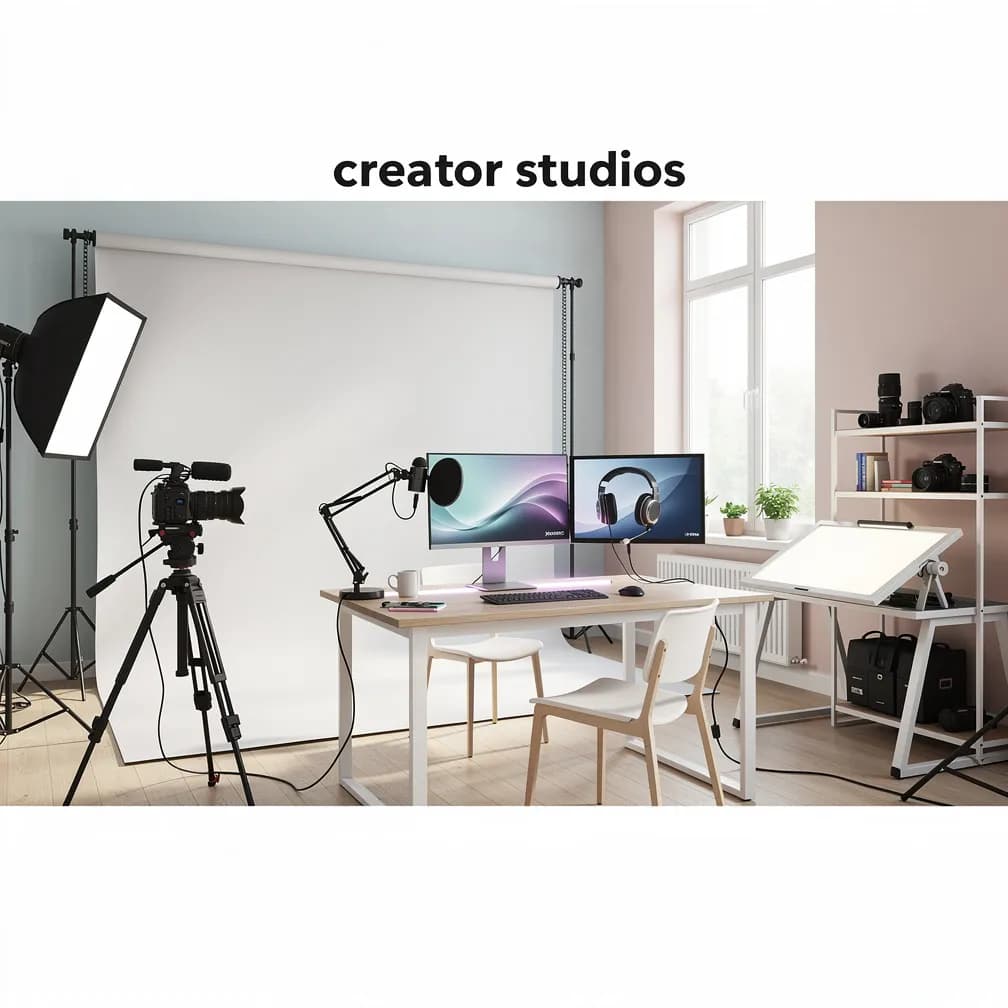
The Creator Studio Playbook: How to Build a Media-Grade Operation From Your Bedroom
One-sentence summary: A practical guide to structuring a creator studio as a scalable media company, covering team roles, revenue diversification, and intelligent production workflows that replace guesswork with repeatable systems.
What happened
The solo creator era is ending. Over the past two years, the most successful independent creators have formally incorporated their operations into what the industry now calls "creator studios" — multi-person, multi-channel businesses that behave more like small media groups than individual side hustles.
According to public reporting from SignalFire and CreatorBench, the number of creator-run businesses with three or more full-time employees grew by 40% between 2022 and 2024. Studios like MrBeast Productions, Studio71, and Colin and Samir’s production arm have become case studies for how a single personality can scale into a durable, team-driven enterprise.
Why it matters
A creator without a studio is a freelancer with a volatile income stream. A creator with a studio is a company owner with predictable revenue, institutional leverage, and the ability to compound audience trust into multiple product lines. As the thesis holds — creators become companies, studios become media groups, and AI becomes infrastructure — the difference between surviving and thriving in the creator economy now depends on whether you treat your content operation as a studio from day one.
The practical question is not if you should build a studio, but how.
Who is involved
The shift touches every corner of the creator ecosystem: independent creators hiring their first video editor or community manager; YouTube and TikTok as the primary distribution platforms; agencies like Night Media and Underscore Talent that help structure talent operations; and infrastructure providers such as Patreon, Shopify, and Teachable that monetize beyond ads. On the institutional side, venture capital has started backing studio-focused startups — Spotter, Jellysmack, and Creative Juice each raised significant rounds to fund creator growth via studio-like models.
Creator economy angle
The creator studio is the natural structural evolution of the creator-as-company idea. A solo creator can produce, edit, publish, and promote alone — but only to a ceiling. A studio adds specialized roles: a producer to maintain production calendars, a thumbnail designer to optimize click-through, a community manager to nurture superfans, and a business operator to handle brand deals, merch logistics, and tax filings.
The studio does not replace the creator’s voice; it amplifies it by removing the friction of non-creative tasks. The most successful creator studios are those that retain the founder’s authentic POV while distributing operational responsibilities across a small, empowered team.
Business angle
A creator studio is fundamentally a media business with three revenue tiers: direct (ads, sponsorships), transactional (merch, digital products, tickets), and recurring (memberships, subscriptions, licensing). The business angle lies in diversification and margin.
A well-run studio benchmarks a net margin of 25–40% after paying team salaries, according to industry estimates from The Information and Creator Economy Business School. The key metrics shift from views to revenue per employee and lifetime value per audience segment.
Studios that treat their audience as a compoundable asset — not a transient audience — reinvest in data systems (e.g., community surveys, cohort analysis) and repeatable production processes rather than chasing viral one-offs.
Olympus Tech angle
Olympus Tech view builds on the third leg of the thesis: AI as infrastructure. In a creator studio, AI is not a buzzword — it is the lever that lets a small team produce at the volume of a larger one. AI tools for transcription (Descript), caption generation (Kapwing), script structuring (Jasper), and thumbnail testing (Canva’s AI features) reduce production cycles by 30–60%, according to publicly cited benchmarks.
For a studio with three people, that time gain means an extra publishable video per week or a second platform to repurpose content for. Olympus Tech’s creator-facing infrastructure products are designed to integrate these AI capabilities into a single operational layer — unifying scheduling, asset management, and performance tracking so that the studio’s human talent focuses on creativity, not logistics.
What to watch next
The next evolution of creator studios will be fractional and networked. Instead of hiring a full-time editor, studios will subscribe to AI-assisted editing services that scale on demand. Instead of building a merch line in-house, studios will license their IP to print-on-demand partners.
Watch for the rise of “studio as a service” — platforms that offer creators a ready-made operating system (legal templates, hiring guides, software stacks) for turning their channel into a company. Also watch for larger media groups acquiring creator studios as pipeline talent factories, a trend already visible with Vox Media’s acquisition of the Punch List newsletter and Spotter’s IP-buying strategy.
For creators currently operating alone, the first step is brutally simple: identify the one non-creative task you hate most, and hire or automate it first. The studio is not a building — it is a system. Build the system, and the company follows.
Related
Creator profile: zahra rose — tikTok and strava creator-Ambassador
Zahra Rose bridges digital fitness trends and real-world community runs as a TikTok-Strava ambassador. Her Brussels fun run exemplifies the fund's mission to transform online inspiration into offline participation.

Amazon's fire TV creator hub challenges youTube with new creator opportunities
Amazon's Fire TV Creator Hub offers creators new monetization opportunities beyond traditional ad revenue, including brand partnerships and commissions. The platform leverages Amazon's OS control and customer data to compete with YouTube in the connected TV space.

Creator M&A Is Here. You're Probably Thinking About It All Wrong.
No summary available.