

Niche YouTube creators: emerging power players in AI-Driven discovery
Niche YouTube creators are gaining influence as AI chatbots increasingly cite their detailed, long-form videos, reshaping content discovery. Their rise sparks debates over copyright and monetization as platforms like YouTube integrate AI tools.
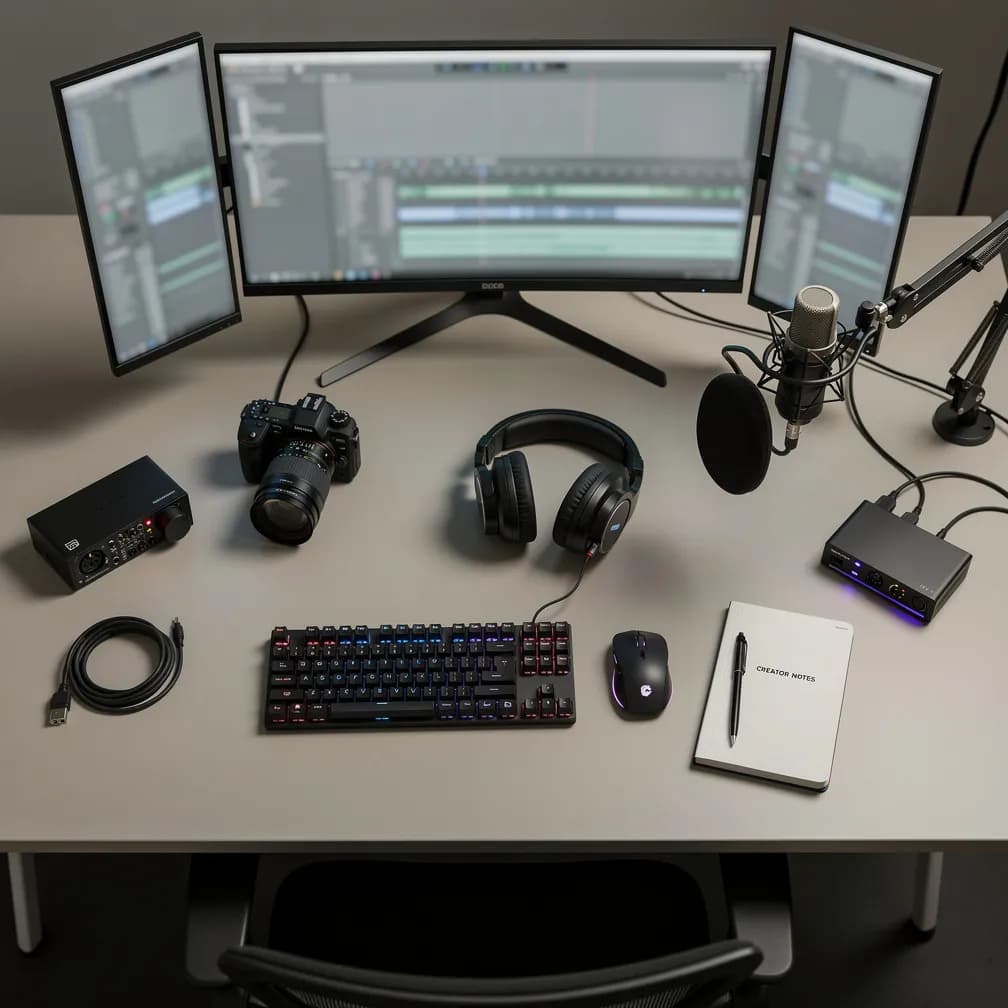
Who they are: An increasing number of independent, specialized YouTube creators who produce detailed, long-form explainer videos—typically longer than 10 minutes. They are distinct from celebrity influencers or brand-owned channels.
Current role/company: These creators operate primarily on YouTube, but their content is now being cited by AI chatbots at scale. According to research from digital marketing agency Jellyfish, shared exclusively with Adweek, over one million unique YouTube videos are cited daily by AI chatbots in the U.S. within the consumer packaged goods (CPG) category alone.
Why they matter now: Between mid-2025 and early 2026, YouTube emerged as the leading referral destination for AI chatbots, surpassing Reddit. YouTube creator content appears in over 25% of all AI chatbot responses, and that figure can surge to nearly 50% in “high-intent” categories such as consumer electronics or financial services.
This rapid ascent is driven by large language models (LLMs) becoming more adept at parsing video content and YouTube’s extensive library of detailed, long-form explainers. AI models explicitly prioritize niche creators with videos longer than 10 minutes and favor independent creators over celebrity influencers or brand-owned content.
Creator-economy relevance: The increased visibility offers a potential advantage for niche creators by driving referral traffic. However, it simultaneously ignites significant anxiety regarding agency, unauthorized content use, and copyright infringement. Prominent creator Marques Brownlee has voiced concerns about generative AI services mimicking his style or using his content for training without explicit consent.
The legal landscape remains complex and challenging, with conflicting court rulings on “fair use” in AI training—some judges treat AI training as transformative, while others uphold traditional copyright infringement principles. A recent settlement where Anthropic agreed to pay authors $1.5 billion for pirated chatbot training material highlights serious financial risks for AI companies using copyrighted works without authorization.
Recent signals: YouTube has implemented a “third-party training setting” that allows creators to opt in or out of allowing their public videos to be used for training AI models by selected companies, with the setting off by default. YouTube also requires creators to disclose when AI is used to meaningfully alter or generate realistic content, applying labels to such videos.
Internally, YouTube is integrating AI into its own ecosystem: the “Ask YouTube” feature, powered by Google’s Gemini, allows users to ask complex questions and receive answers with relevant YouTube videos, often linking directly to specific timestamps. For creators, YouTube Studio now offers AI tools like “Ask Studio” for scripting and idea generation, and “Effects Maker” with AI-powered features for Shorts.
However, these internal AI features—particularly those that summarize videos or provide jump-to highlights—raise concerns that they could lead to reduced direct engagement and watch time, potentially impacting monetization through advertising.
What to watch next: The evolving relationship between YouTube content and AI chatbots underscores a critical need for standardized compensation models for creators whose work fuels these AI systems. While the Anthropic settlement sets a precedent, a universal framework for licensing and payment for training data is still developing.
As AI continues to reshape content consumption, the balance between technological advancement, creator rights, and fair compensation will remain a central challenge for the digital economy. Additionally, other platforms like TikTok and Instagram are reportedly encouraging creators to produce longer-form videos to attract AI citations, indicating that the “pivot to video” for AI models is influencing the broader creator economy.
Sources51 · open list
- tubefilter.com
- tubefilter.com
- roastbrief.us
- youtube.com
- youtube.com
- google.com
- forbes.com
- ypulse.com
- google.com
- entrepreneur.com
- youtube.com
- socialmediatoday.com
- youtube.com
- youtube.com
- techradar.com
- youtube.com
- youtube.com
- tubefilter.com
- tubefilter.com
- pikaseo.com
- npr.org
- qz.com
- builtin.com
- vorys.com
- youtube.com
- youtube.com
- youtube.com
- youtube.com
- thefashionlaw.com
- nardiello.law
- socialmediatoday.com
- youtube.com
- youtube.com
- technologymagazine.com
- bestercapitalmedia.com
- dante-ai.com
- youtube.com
- reddit.com
- sciencefocus.com
- skyword.com
- medium.com
- quora.com
- manychat.com
- youtube.com
- youtube.com
- youtube.com
- youtube.com
- youtube.com
- inflowlabs.com
- contentmarketinginstitute.com
- the-decoder.com
Related
Creator profile: Zahra Rose — TikTok and Strava creator-ambassador
Zahra Rose bridges digital fitness trends and real-world community runs as a TikTok-Strava ambassador. Her Brussels fun run exemplifies the fund's mission to transform online inspiration into offline participation.

Amazon's fire TV creator hub challenges youTube with new creator opportunities
Amazon's Fire TV Creator Hub offers creators new monetization opportunities beyond traditional ad revenue, including brand partnerships and commissions. The platform leverages Amazon's OS control and customer data to compete with YouTube in the connected TV space.
Creator M&A Is Here. You're Probably Thinking About It All Wrong.
Selling Your Brand? Debunking 3 Big Myths About Creator M&A