

The Case for Long-Term Creator Partnerships: Cannes Lions Signals a Power Shift from Sponsorships to Strategic Alliances
## 2) One-Sentence Summary The Cannes Lions International Festival of Creativity has formally recognized creators as strategic business partners, moving the industry from one-off sponsorships to sustained alliances that yield higher engagement, lower costs, and a new wave of crea...
2) One-Sentence Summary
The Cannes Lions International Festival of Creativity has formally recognized creators as strategic business partners, moving the industry from one-off sponsorships to sustained alliances that yield higher engagement, lower costs, and a new wave of creator-founded billion-dollar brands.
3) What Happened
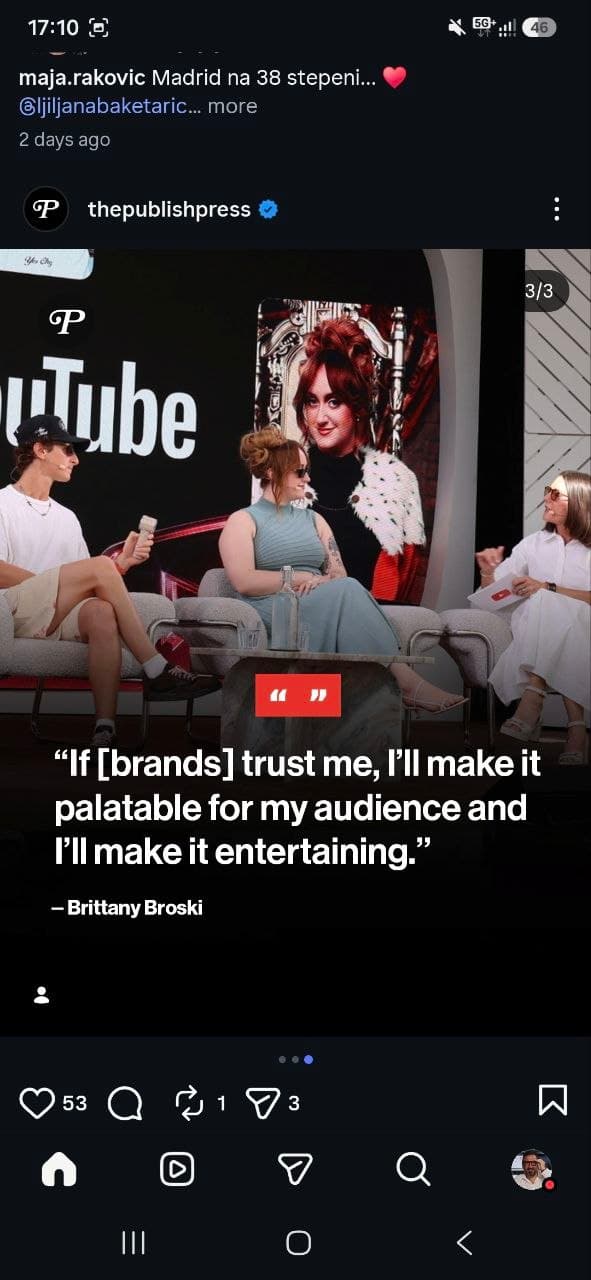
At Cannes Lions, a festival traditionally focused on conventional advertising, creator attendance increased tenfold, and a dedicated “Creator Beach” was expanded alongside the launch of the LIONS Creators program in 2024. The program included LIONS xChange Roundtables and a full day of creator-centric content. Festival CEO Simon Cook explicitly linked this shift to Goldman Sachs’ projection that the creator economy will reach $480 billion by 2027, underscoring that creators are now treated as strategic business partners rather than amplification tools. Data presented at the event showed that long-term creator collaborations consistently outperform one-off campaigns, with engagement rates up to 300% higher in some cases and 70% higher in others, as well as up to four times better conversion rates. Brands also report potential content creation cost reductions of 40–60% and lower customer acquisition costs (CAC). As a result, 63% of brands now prefer sustained collaborations over one-time engagements, a figure that continues to grow annually.
4) Why It Matters
This shift redefines the balance of power in marketing. Sustained partnerships foster deeper audience trust and loyalty, leading to higher customer lifetime value (CLV) and more predictable marketing outcomes. More disruptively, creators are moving from “renters to owners” of their influence. They are negotiating compensation structures linked to brand outcomes, including revenue-share and even equity participation. This poses a direct competitive challenge to traditional agencies, which creators can often bypass by generating ideas and producing content faster and more cost-effectively. The trend also extends to product launches: creators like Logan Paul and KSI built Prime Hydration, which generated over $1.2 billion in sales in 2023, and MrBeast founded Feastables. These creator-as-CEO ventures are competing head-on with established consumer goods corporations.
5) Who Is Involved
Key players include the Cannes Lions festival leadership (CEO Simon Cook), major creators such as Logan Paul, KSI, and MrBeast, who exemplify the creator-as-CEO model, and Dhar Mann, whose negative audience reactions to AI-generated content illustrate the importance of authenticity. Brands across industries are increasingly shifting their budgets toward sustained creator relationships. Goldman Sachs is cited for the $480 billion projection, and the festival itself has institutionalized creator participation through LIONS Creators and the expanded Creator Beach. The “creator middle class” also features in the discussion, as concerns emerge that superstar creators may dominate high-profile events despite micro and niche creators often delivering higher engagement rates and stronger relevance.
6) Creator Economy Angle
The creator economy is maturing from a side hustle ecosystem into a structured industry where creators operate as companies. The Cannes Lions developments underscore that creators are no longer just content producers but strategic partners capable of building billion-dollar brands. The shift to long-term partnerships rewards creators with predictable revenue and equity stakes, while brands gain cost efficiencies and deeper audience trust. However, the rise of artificial intelligence introduces a “Creator Divide,” where AI makes “average creativity more exposed,” reinforcing the value of human judgment and lived experience. Dhar Mann’s experience shows audiences reject AI-generated content that lacks genuine connection. AI can enhance creator efficiency in discovery, audience analysis, and production acceleration, but it cannot replace the identity and reliability audiences seek from human creators.
7) Business Angle
From a business perspective, the move from sponsorships to strategic alliances offers measurable financial advantages. Long-term collaborations reduce content creation costs by 40–60% and lower CAC, while delivering higher conversion rates and CLV. Brands face challenges, including standardizing metrics across diverse platforms and balancing creative freedom with brand guidelines. A significant hurdle is proving measurable value to the C-suite. The trend also threatens traditional agencies, as creators increasingly compete directly by launching their own products and services, often faster and at lower cost. The “creator-as-CEO” model, exemplified by Prime Hydration’s $1.2 billion sales in 2023 and Feastables, positions creators as rivals to established consumer goods companies and agencies alike.
8) Olympus Tech Angle
This section is omitted because the source material contains no information directly relevant to Olympus Tech or its thesis that AI is becoming infrastructure.
9) What to Watch Next
Industry experts predict creators will become a core part of brand strategy, with permanent budgets moving beyond experimental phases. The evolution points toward authentic human connection remaining central, as creator-led ventures continue to disrupt traditional consumer goods and agency models. Brands will need to navigate the tension between leveraging AI for efficiency and preserving the genuine connection audiences expect. The “creator middle class” may face sidelining in favor of superstar partnerships, but micro and niche creators could prove more valuable for engagement and relevance. The Cannes Lions shift signals that the creator economy is no longer a side note—it is a permanent structural force in marketing and commerce, with implications for how brands, agencies, and investors allocate resources and define value.
Related
VidCon Decoded: A Newcomer's Guide to the Creator Industry's Main Event
No summary available.
Niche YouTube creators: emerging power players in AI-Driven discovery
Niche YouTube creators are gaining influence as AI chatbots increasingly cite their detailed, long-form videos, reshaping content discovery. Their rise sparks debates over copyright and monetization as platforms like YouTube integrate AI tools.
VidCon 2026 Highlights Creator Economy's Evolution: Equity Deals, AI Infrastructure, and Global Expansion
VidCon 2026 marked a turning point as creators increasingly secure equity stakes in brands, AI becomes foundational infrastructure, and global markets reshape the industry, with the creator economy projected to exceed $1.3 trillion by 2033. ## What Happened VidCon 2026, celebra...